


Human Hair Extensions Price Guide for 2026
Understanding human hair extensions price can feel overwhelming when you're searching for the perfect quality at the right investment level. The market offers numerous options ranging from budget-friendly synthetic alternatives to premium raw hair collections, and knowing what determines the cost helps you make informed decisions. Whether you're a first-time buyer or a seasoned extension enthusiast, understanding pricing structures ensures you get exceptional value while achieving your desired look.
What Determines Human Hair Extensions Price
Multiple factors influence the final cost of human hair extensions, creating a wide spectrum of pricing options across the market. The quality of hair stands as the most significant determinant, with raw, unprocessed hair commanding premium prices compared to chemically treated alternatives.
Hair origin plays a crucial role in establishing price points. Vietnamese, Indian, and Burmese hair each carry distinct characteristics and price ranges based on availability, texture, and durability. Vietnamese hair typically offers naturally straight, thick strands that hold styles exceptionally well, while Indian hair provides natural wave patterns with incredible versatility.
Quality Grades and Price Impact
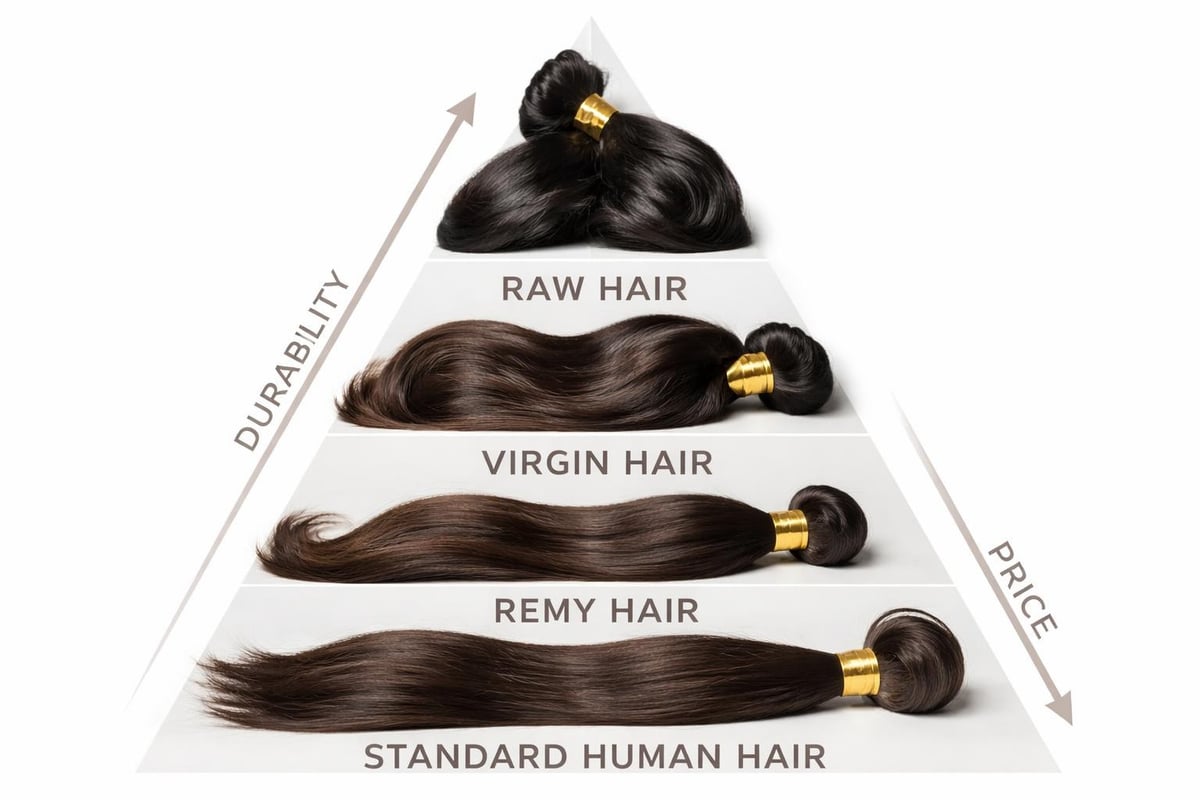
The hair extension industry categorizes human hair into several quality tiers that directly affect pricing:
- Raw hair: Completely unprocessed, single-donor hair with intact cuticles
- Virgin hair: Never chemically treated, potentially from multiple donors
- Remy hair: Cuticles aligned in one direction, may be processed
- Standard human hair: Mixed cuticles, undergone chemical processing
Raw hair extensions represent the highest quality tier, explaining their premium positioning in the market. According to industry pricing guides, raw hair can cost significantly more than processed alternatives, but the longevity and natural appearance justify the investment.
Length and Volume Pricing Structure
Hair extension length dramatically impacts the human hair extensions price, with costs increasing proportionally as length extends. Standard pricing typically begins at 12-14 inches and escalates with each additional length increment.
| Length Range | Price Multiplier | Typical Use Cases |
|---|---|---|
| 12-16 inches | Base price | Bob styles, shoulder-length looks |
| 18-22 inches | 1.5-2x base | Mid-back length, versatile styling |
| 24-28 inches | 2.5-3x base | Long, dramatic transformations |
| 30+ inches | 3.5x+ base | Extra-long, statement styles |
Volume requirements also affect overall costs. A full head installation typically requires 3-4 bundles for adequate density, while those seeking extra fullness may need 4-5 bundles. The cost differences between various application methods highlight how installation techniques influence both initial investment and long-term maintenance expenses.
Bundle Pricing Versus Individual Products
Purchasing bundles individually offers flexibility but often comes at a higher per-unit cost compared to bundle deals. Many retailers provide multi-bundle packages that reduce the overall human hair extensions price per bundle when buying complete sets.
Smart shoppers consider total project costs rather than individual bundle prices. A three-bundle deal might offer better value than purchasing bundles separately, even if the upfront cost appears higher.
Raw Hair Extensions Versus Processed Hair
The distinction between raw and processed hair creates substantial price variations in the extensions market. Raw hair maintains all natural properties, including cuticles perfectly aligned in their original direction, which preserves the hair's integrity and lifespan.
Processed hair undergoes chemical treatments to achieve specific textures or colors, which compromises the cuticle structure. While these treatments make hair more affordable initially, the reduced durability means more frequent replacements. Comparing synthetic versus human hair investment value demonstrates how initial savings on lower-quality options often result in higher long-term costs.
Longevity and Cost Per Wear
Evaluating human hair extensions price through the lens of cost per wear provides clearer value assessment:
- Calculate total investment including hair, installation, and maintenance products
- Estimate realistic lifespan based on quality and care routine
- Divide total cost by expected wear days to determine daily cost
- Compare across quality tiers to identify best value proposition
Raw hair extensions from reputable sources typically last 1-2 years with proper care, while processed alternatives may require replacement every 3-6 months. This durability difference significantly impacts the true cost of ownership.
Candal Beauty's raw hair bundles exemplify premium quality that delivers extended wear value. These ethically sourced collections maintain their texture and integrity throughout their lifespan, reducing replacement frequency and overall costs.
Application Method and Installation Costs
Different extension methods carry varying installation expenses that factor into total human hair extensions price. Professional installation ensures optimal results but adds to the overall investment, while some methods allow DIY application for budget-conscious buyers.
Popular Application Methods and Price Ranges
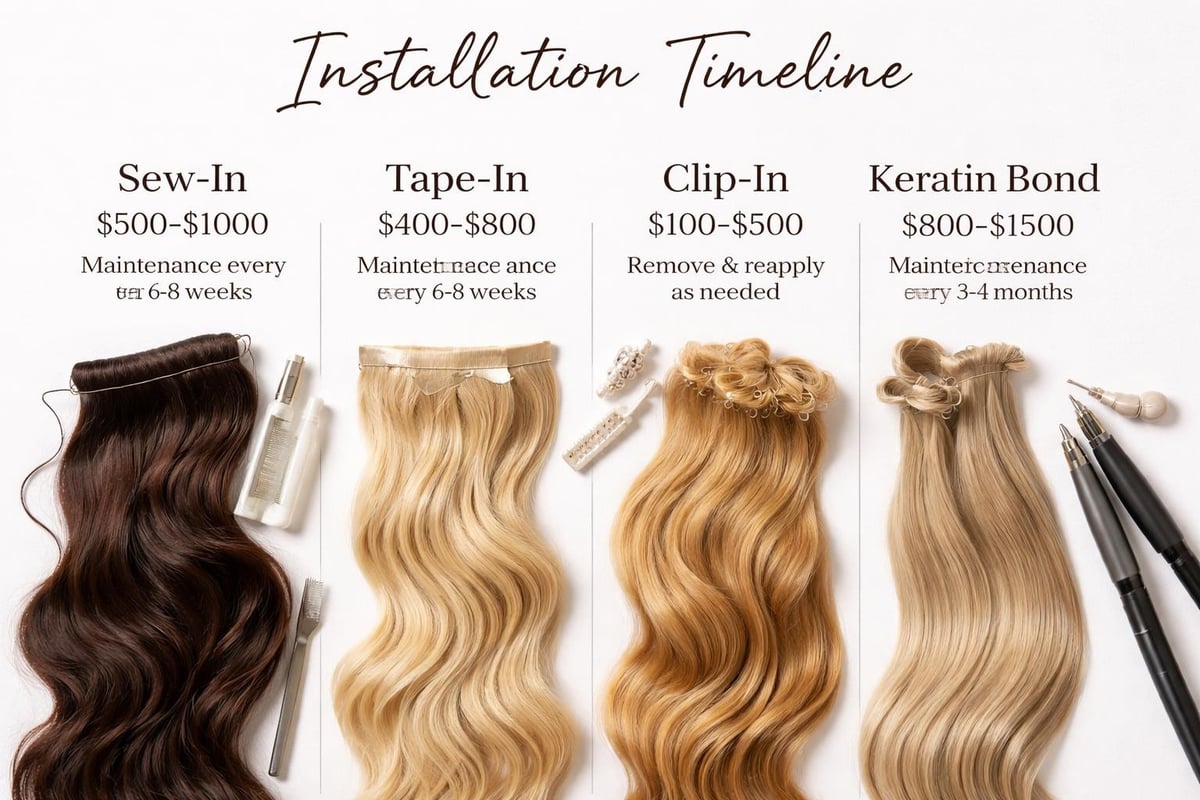
Sew-in wefts remain among the most cost-effective options for long-term wear. The hair itself ranges from moderate to premium pricing, while installation typically runs $150-$400 depending on stylist expertise and location. These installations last 6-8 weeks between maintenance appointments.
Tape-in extensions offer semi-permanent attachment with easier removal and reinstallation. According to the 2026 hair extension price guide, tape-ins combine moderate hair costs with installation fees ranging $200-$600, requiring repositioning every 6-8 weeks.
Clip-in extensions provide the most budget-friendly installation option since they require no professional application. While quality clip-ins carry premium human hair extensions price tags, the elimination of installation fees makes them accessible for varying budgets. Check out options in raw hair clip-in extensions for temporary transformation solutions.
| Application Type | Hair Cost Range | Installation Cost | Lifespan |
|---|---|---|---|
| Sew-in | $200-$800 | $150-$400 | 6-8 weeks per install |
| Tape-in | $150-$600 | $200-$600 | 6-8 weeks reapplication |
| Clip-in | $150-$700 | $0 (DIY) | 1-2 years |
| Keratin bond | $300-$1,200 | $400-$1,000 | 3-6 months |
Geographic and Brand Price Variations
Location significantly influences human hair extensions price, with major metropolitan areas commanding premium pricing for both products and services. Urban markets in coastal cities typically see 20-30% higher costs compared to smaller markets.
Brand positioning creates substantial price differences even for comparable quality levels. Established brands with extensive marketing budgets often charge premium prices, while direct-to-consumer retailers offer competitive pricing by eliminating middleman markups.
Direct Source Advantages
Purchasing from companies that source directly from hair suppliers reduces costs while maintaining quality standards. This business model eliminates multiple distribution layers, passing savings to consumers without compromising on ethical sourcing or quality control.
Candal Beauty operates on this direct-sourcing principle, providing premium Vietnamese, Indian, and Burmese raw hair at accessible price points. Their transparent supply chain ensures quality while keeping human hair extensions price competitive.
Texture Types and Pricing Differences
Natural texture patterns influence pricing structures across human hair extension collections. Straight hair typically represents the most affordable option within quality tiers, as it requires minimal processing to maintain smoothness.
Wavy textures command moderate price points, offering versatility for multiple styling options. The natural wave pattern provides body and movement without requiring daily styling effort, making it popular for those seeking low-maintenance glamour.
Curly and kinky textures often carry premium pricing due to sourcing challenges and higher demand. These textures require specific donor profiles and careful processing to maintain curl definition without damage. Explore premium options in raw Indian curly hair extensions for natural, bouncy curls.
Matching Natural Hair Texture
Selecting extensions that complement your natural texture reduces styling time and product investment. The closer the match, the more seamlessly extensions blend, eliminating the need for excessive heat styling or chemical treatments that shorten lifespan.
Closure and Frontal Pricing
Lace closures and frontals complete installations with natural-looking hairlines and partings, adding to the overall human hair extensions price but delivering polished, professional results. These pieces require skilled craftsmanship, influencing their cost structure.
HD lace technology represents the premium tier in closure and frontal construction. The ultra-thin lace melts seamlessly into various skin tones, creating undetectable hairlines. Industry insights on pricing variations show HD lace pieces commanding 30-50% premiums over standard lace alternatives.
Closure Versus Frontal Investment
Closures cover smaller areas (4x4 or 5x5 inches) and cost less than frontals, which span ear to ear (13x4 or 13x6 inches). The choice between these options depends on styling flexibility needs and budget considerations:
- Closures: $80-$250 for quality raw hair options
- Frontals: $150-$400 for premium HD lace varieties
Both options from raw HD lace frontals and closures provide natural-looking solutions that justify their investment through versatile styling capabilities and realistic appearance.
Seasonal Sales and Promotional Pricing
Strategic purchasing during promotional periods can significantly reduce human hair extensions price without compromising quality. Many retailers offer seasonal discounts during slower business periods or to introduce new inventory.
Black Friday, Cyber Monday, and holiday sales typically provide the deepest discounts, with savings ranging from 20-40% off regular pricing. Summer clearance events also present opportunities as demand typically decreases during warmer months.
Email List Advantages
Subscribing to retailer newsletters grants early access to sales and exclusive promotional codes. Many companies reward loyal subscribers with first notification of upcoming promotions, allowing strategic purchase planning.
Bundle deals and multi-product discounts provide additional savings opportunities. Purchasing complete installation sets-bundles plus closure or frontal-often includes package pricing that reduces per-item costs compared to individual purchases.
Maintenance Costs and Long-Term Investment
The true human hair extensions price extends beyond initial purchase to include ongoing maintenance requirements. Quality products paired with proper care routines extend lifespan, while inadequate maintenance necessitates premature replacement.
Essential maintenance products include sulfate-free shampoos, deep conditioning treatments, leave-in conditioners, and heat protectants. Monthly maintenance product costs typically range $30-$60 for quality formulations that preserve extension integrity.
Professional maintenance appointments add recurring expenses for certain application methods:
- Sew-in tightening every 6-8 weeks: $75-$150
- Tape-in repositioning every 6-8 weeks: $100-$200
- Keratin bond maintenance every 8-12 weeks: $150-$300
- Clip-in maintenance: minimal (DIY cleaning and storage)
Learn proper care techniques through guides on maintaining raw hair to maximize your investment and extend wear time.
Budget Planning for Quality Extensions
Creating a realistic budget requires accounting for all associated costs rather than focusing solely on hair price. Comprehensive pricing breakdowns reveal total investment expectations across different quality tiers and application methods.
Complete Budget Components
Initial investment includes hair bundles, closures or frontals, installation fees, and initial styling. For a full raw hair installation, expect total startup costs between $600-$1,500 depending on length, texture, and installation method.
Ongoing maintenance encompasses monthly products, regular salon visits for adjustments, and periodic replacement of worn pieces. Budget $100-$300 monthly for comprehensive maintenance depending on installation complexity.
Replacement timeline varies by quality tier. Budget-conscious buyers purchasing lower-quality extensions may face replacement every 3-6 months, while those investing in premium raw hair typically enjoy 12-24 months of wear, making the higher initial human hair extensions price more economical long-term.
Wholesale Versus Retail Pricing
Entrepreneurs building hair businesses benefit from understanding wholesale pricing structures that enable profitable retail operations. Wholesale purchases require larger minimum orders but offer substantial per-unit savings.
Typical wholesale margins provide 40-60% discounts off retail pricing, allowing business owners to maintain competitive retail prices while preserving profit margins. Starting a hair business requires understanding both quality assessment and pricing strategies.
Wholesale relationships with ethical suppliers ensure consistent quality and reliable inventory. Resources for starting your hair and beauty business provide guidance on sourcing, pricing, and building profitable extension businesses.
Investment Versus Budget Options
The human hair extensions price spectrum accommodates various financial situations, but understanding value versus cost prevents disappointing purchases. The least expensive options rarely deliver satisfactory results, leading to frustration and additional spending to replace subpar products.
Mid-range investments typically provide the best balance between quality and affordability for most buyers. These options offer genuine human hair with proper cuticle alignment and reasonable durability without premium pricing.
Premium raw hair represents the pinnacle of quality and longevity. While initial costs exceed budget alternatives, the extended lifespan, superior appearance, and minimal maintenance requirements often result in lower cost per wear. Articles discussing whether raw hair extensions are worth the investment explore this value proposition in detail.
| Price Tier | Quality Level | Expected Lifespan | Best For |
|---|---|---|---|
| Budget ($100-$200) | Standard human hair | 2-4 months | Temporary events, experimentation |
| Mid-range ($200-$500) | Remy or virgin hair | 6-12 months | Regular wear, balanced investment |
| Premium ($500-$1,200) | Raw, single-donor | 12-24+ months | Long-term wear, maximum value |
Understanding human hair extensions price requires evaluating quality, longevity, and total cost of ownership rather than focusing solely on initial purchase amounts. When you're ready to invest in premium raw hair that delivers exceptional value and lasting beauty, Candal Beauty offers ethically sourced Vietnamese, Indian, and Burmese extensions with worldwide shipping. Their commitment to quality and transparent pricing ensures you receive authentic raw hair that maintains its integrity throughout extended wear, making every dollar of your investment worthwhile.


